
Brain & Neurological Imaging (MRI / MRA / CT)
High-resolution Brain MRI, MRA, and CT neuroimaging at Gangnam Heartscan Healthcare Center to detect brain tumors, cerebral hemorrhage, intracranial aneurysms, stroke, encephalitis, and multiple sclerosis.
Gangnam Heartscan Healthcare Center · Diagnostic Protocol Guide · 16 Board-Certified Specialists
1:1 Consultation →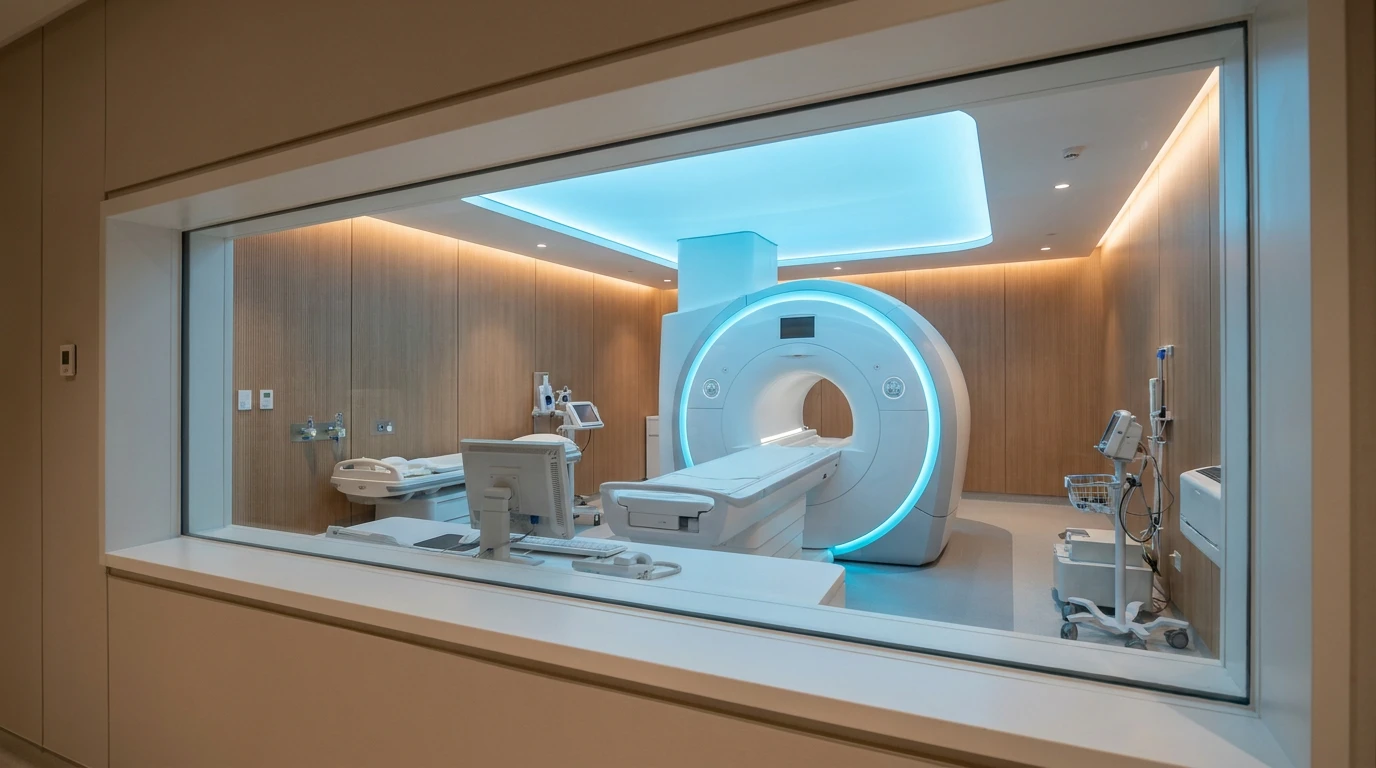
Procedure Overview
Brain & Neurological Imaging (MRI / MRA / CT) at Gangnam Heartscan Healthcare Center provides non-invasive cross-sectional evaluation of the brain parenchyma and cerebrovascular circulation within our Full-Body Imaging & Diagnostic Screening center. Utilizing 1.5T Magnetic Resonance Imaging (MRI), Magnetic Resonance Angiography (MRA), and 128-channel multi-detector CT (MDCT), every neuroimaging study is interpreted by Chief Medical Director Dr. Seonghak Park (Board-Certified Diagnostic Radiology Specialist, M.D., Ph.D.) within our multidisciplinary team of 16 board-certified specialists.
Clinical Indications
- Preventive cerebrovascular screening for silent cerebral infarction, intracranial arterial stenosis, and unruptured cerebral aneurysms
- Diagnostic evaluation of chronic or recurrent headaches, dizziness, vertigo, tinnitus, numbness, or memory changes
- Risk stratification for patients with hypertension, diabetes, hyperlipidemia, atrial fibrillation, or family history of stroke, frequently combined with Carotid Artery Ultrasound
- Assessment of intracranial tumors, microvascular white-matter changes, or neurodegenerative conditions
Clinical Examination Summary Table
| Parameter / Examination | Clinical Purpose | Preparation / Protocol |
|---|---|---|
| 1.5T Brain MRI (T1, T2, FLAIR, DWI) | Evaluates brain tissue structure, acute or silent infarctions, and white-matter lesions | Radiation-free scan (20–30 minutes); remove all metal jewelry, watches, and hairpins |
| Time-of-Flight Intracranial MRA | Non-contrast 3D mapping of cerebral arteries for stenosis, occlusion, or aneurysms | Performed seamlessly during the same 1.5T MRI session without catheterization |
| 128-Channel Cranial MDCT | Rapid cross-sectional assessment of acute hemorrhage, cranial bone, and calcifications | Brief 1–2 minute scan; pre-scan screening for pregnancy or contrast allergy |
How the Screening Works
- MRI Safety & Metallic Implant Verification: Clinical staff verify the absence of ferromagnetic implants, cardiac pacemakers, or metallic foreign bodies before entering the magnet suite.
- Multi-Sequence Neuroimaging Acquisition: The patient rests supine on the scanner table with hearing protection while high-resolution structural MRI and vascular MRA sequences are acquired.
- Radiologist Interpretation & Consultation: Cross-sectional images and 3D vascular reconstructions are reviewed with the specialist, with follow-up coordinated through our Consultation & Inquiry Desk.
Preparation & Precautions
- Non-contrast Brain MRI and Time-of-Flight MRA do not require fasting; if a contrast-enhanced study is scheduled, fasting for 6 hours prior is required.
- Remove all metallic items including jewelry, piercings, eyeglasses, hearing aids, removable dental prostheses, and magnetic credit cards before entering the MRI room.
- Inform the medical team in advance if you have a cardiac pacemaker, implantable defibrillator, cochlear implant, cerebral aneurysm clip, or claustrophobia.
Frequently Asked Questions
Can Brain MRA visualize cerebral blood vessels without injecting contrast dye?
Yes, Time-of-Flight (TOF) Intracranial MRA uses the natural magnetic signal of flowing arterial blood on our 1.5T MRI system to generate detailed three-dimensional images of the cerebral arteries, allowing detection of vascular narrowing or cerebral aneurysms without intravenous contrast injection or radiation.
When is Carotid Artery Ultrasound recommended alongside Brain MRI and MRA?
While Brain MRI and MRA evaluate the brain tissue and intracranial blood vessels inside the skull, Carotid Artery Ultrasound examines the cervical carotid arteries in the neck that supply blood to the brain, providing a complete extracranial-to-intracranial stroke risk assessment.
Clinical Screening Notice & Personalized Consultation
All diagnostic screenings, imaging protocols, and sedated endoscopy examinations at Gangnam Heartscan Healthcare Center (B1, Dongil Tower, 38 Teheran-ro 114-gil, Gangnam-gu, Seoul; Samseong Station Exit 2) are performed and interpreted by our 16 board-certified specialists led by Chief Medical Director Dr. Seonghak Park, MD, PhD. Preparation requirements (such as 8–12 hour fasting, contrast media precautions, or post-sedation driving restrictions) vary by clinical condition and medication history.
Request a 1:1 Consultation