
Full-Body Imaging & Diagnostic Screening
Precision cross-sectional diagnostic imaging at Gangnam Heartscan Healthcare Center using 1.5T MRI/MRA, 128-channel MDCT, and high-resolution Doppler ultrasound for brain, spine, chest, pancreas-focused abdomen, carotid artery, and prostate evaluation.
Gangnam Heartscan Healthcare Center · Specialized Clinical Center · Gangnam-gu, Seoul
1:1 Consultation →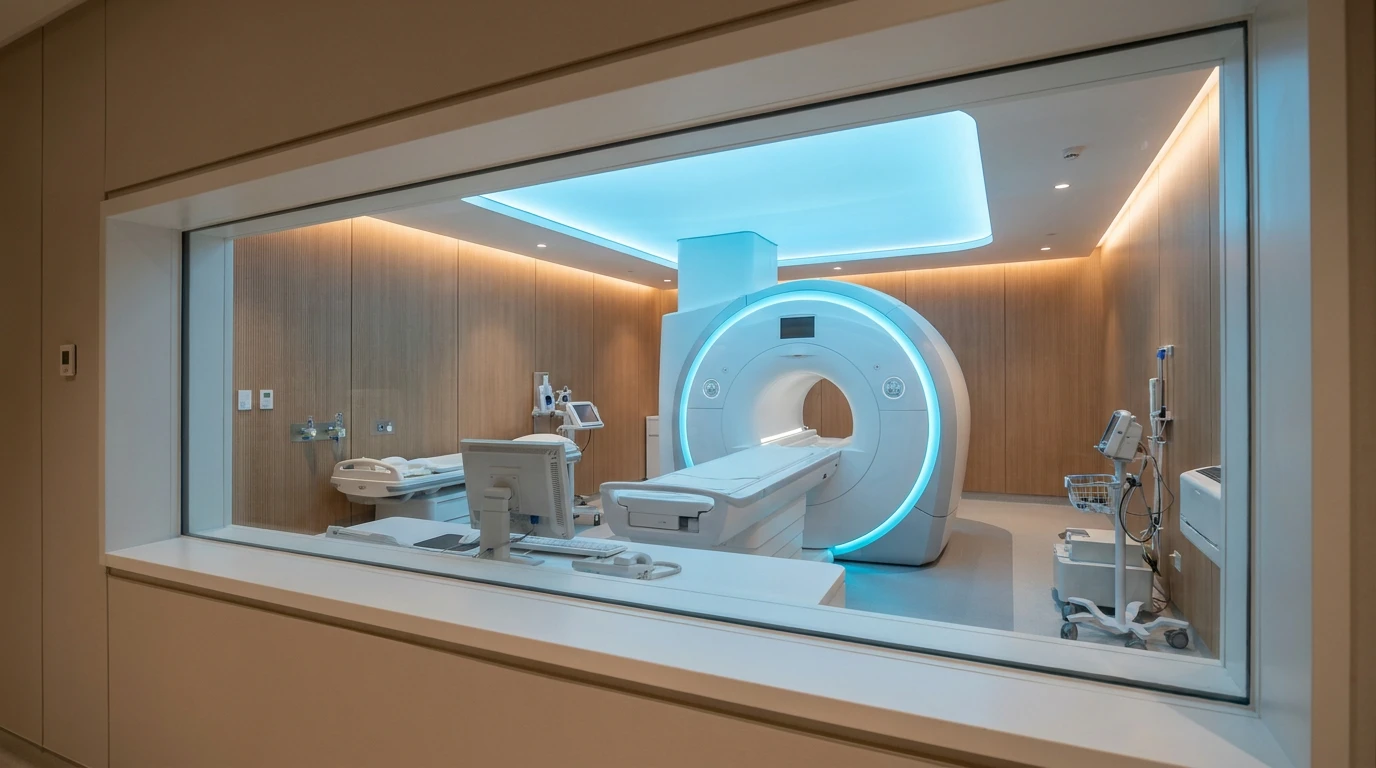
Overview
The Full-Body Imaging & Diagnostic Screening center at Gangnam Heartscan Healthcare Center delivers cross-sectional radiological diagnostics powered by 1.5T MRI, 128-channel multi-detector CT (MDCT), and high-resolution Color Doppler ultrasound. Led by Chief Medical Director Dr. Seonghak Park (Board-Certified Diagnostic Radiology Specialist, M.D., Ph.D., member of RSNA and ISMRM) alongside our multidisciplinary team of 16 board-certified specialists, every imaging study undergoes structured radiological interpretation. Explore our full specialist roster in the Medical Staff Directory.
Key Diagnostic Imaging Programs
- Brain & Neurological Imaging (MRI / MRA / CT): Non-invasive neuroimaging evaluating cerebral parenchyma, intracranial vessels, stroke risk, aneurysms, and microvascular changes.
- Spinal Imaging (Cervical & Lumbar MRI / CT): High-contrast visualization of intervertebral discs, spinal canal stenosis, nerve root compression, and vertebral alignment.
- Chest / Thoracic Imaging (Low-Dose Lung CT): Low-dose thoracic MDCT screening for early pulmonary nodules, emphysema, mediastinal structures, and pleural abnormalities.
- Abdominal Imaging (Abdominal MRI, Pancreas-Focused): Radiation-free cross-sectional MRI focused on the pancreas, hepatobiliary system, kidneys, and retroperitoneal organs.
- Carotid Artery Ultrasound: High-resolution duplex Doppler evaluation of carotid intima-media thickness, atherosclerotic plaque, and cerebral blood flow velocity.
- Prostate & Bladder Ultrasound: Focused pelvic ultrasound assessing prostate volume, parenchymal echogenicity, bladder wall integrity, and post-void residual volume.
Clinical Diagnostic Summary Table
| Parameter / Examination | Clinical Purpose | Preparation / Protocol |
|---|---|---|
| 1.5T Brain MRI & Intracranial MRA | Evaluates cerebral tissue, ischemic changes, vascular stenosis, and aneurysms | Remove all metallic objects; pre-scan screening for pacemakers or implants |
| Low-Dose Thoracic (Lung) MDCT | Detects small pulmonary nodules and parenchymal lung lesions at reduced radiation dose | No fasting required for non-contrast lung CT; brief breath-hold during scan |
| Pancreas-Focused Abdominal MRI | High-contrast soft-tissue imaging of pancreas, biliary ducts, liver, and kidneys | Fasting for 6 hours prior to optimize gallbladder and pancreatic duct visualization |
| Carotid & Pelvic Ultrasound | Radiation-free evaluation of carotid arteries, prostate gland, and urinary bladder | Full bladder required prior to Prostate & Bladder Ultrasound examination |
Preparation & Examination Flow
- Radiological Safety & Implant Screening: Verification of metallic implants, cardiac pacemakers, claustrophobia history, and contrast allergies prior to MRI or CT entry.
- Protocol Selection & Positioning: Customization of MRI pulse sequences or low-dose MDCT parameters according to clinical indications.
- High-Resolution Image Acquisition: Performed by licensed radiological technologists under board-certified radiologist supervision.
- Specialist Radiological Interpretation: Detailed cross-sectional review and consultation scheduling through our Consultation & Inquiry Desk.
Important Clinical Considerations
- Patients with implanted cardiac pacemakers, implantable cardioverter-defibrillators (ICDs), cochlear implants, or certain ferromagnetic vascular clips must notify the medical team before scheduling an MRI examination.
- For Abdominal MRI or contrast-enhanced CT scans, fasting for at least 6 hours prior is required, and renal function is verified before contrast administration.
Frequently Asked Questions
What is the clinical difference between Brain MRI and Brain MRA?
Brain MRI evaluates the structural anatomy of brain tissue to detect silent cerebral infarctions, white-matter changes, or tumors, whereas Brain MRA specifically visualizes the cerebral arteries without catheterization to screen for intracranial vascular stenosis, occlusion, or unruptured cerebral aneurysms.
Why is Pancreas-Focused Abdominal MRI recommended alongside abdominal ultrasound?
Deep retroperitoneal organs such as the pancreas can be partially obscured by bowel gas during standard abdominal ultrasound, whereas Pancreas-Focused 1.5T Abdominal MRI provides unobstructed, radiation-free cross-sectional soft-tissue contrast of the pancreatic parenchyma and biliary ductal system.
Clinical Screening Notice & Personalized Consultation
All diagnostic screenings, imaging protocols, and sedated endoscopy examinations at Gangnam Heartscan Healthcare Center (B1, Dongil Tower, 38 Teheran-ro 114-gil, Gangnam-gu, Seoul; Samseong Station Exit 2) are performed and interpreted by our 16 board-certified specialists led by Chief Medical Director Dr. Seonghak Park, MD, PhD. Preparation requirements (such as 8–12 hour fasting, contrast media precautions, or post-sedation driving restrictions) vary by clinical condition and medication history.
Request a 1:1 Consultation