Breast, Thyroid Screening
Dedicated breast and thyroid diagnostic screening at Gangnam Heartscan Healthcare Center combining digital mammography, high-resolution breast and thyroid ultrasound, dense-breast work-ups, and supplemental breast MRI when clinically indicated.
Gangnam Heartscan Healthcare Center · Specialized Clinical Center · Gangnam-gu, Seoul
1:1 Consultation →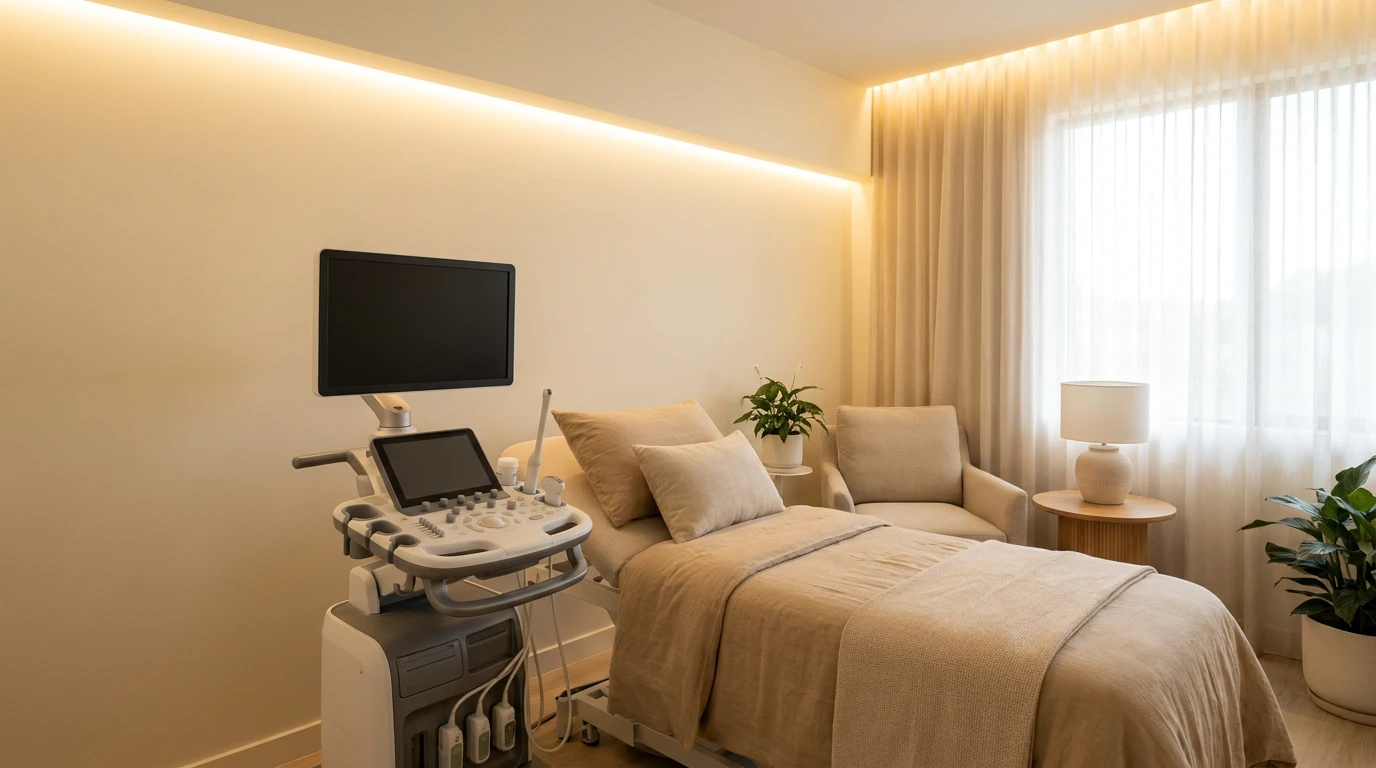
Overview
The Breast, Thyroid Screening center at Gangnam Heartscan Healthcare Center provides specialized diagnostic imaging for breast and thyroid conditions using digital mammography and high-frequency Color Doppler ultrasound. Interpreted by Chief Medical Director Dr. Seonghak Park and our multidisciplinary team of 16 board-certified specialists across Diagnostic Radiology, Internal Medicine, and Obstetrics & Gynecology, our screening protocols prioritize early lesion characterization, microcalcification detection, and structured BI-RADS and TI-RADS reporting. View our full clinical faculty in the Medical Staff Directory.
Key Diagnostic Screening Programs
- Breast Screening (Mammography & Ultrasound): Dual-modality breast imaging combining low-dose digital mammography for microcalcifications with high-resolution breast ultrasound for dense glandular tissue, cysts, fibroadenomas, and solid nodules.
- Thyroid Screening (Thyroid Ultrasound): High-frequency neck and thyroid Color Doppler ultrasound assessing thyroid nodules, parenchymal echogenicity, thyroiditis, cysts, and cervical lymph nodes.
Clinical Diagnostic Summary Table
| Parameter / Examination | Clinical Purpose | Preparation / Protocol |
|---|---|---|
| Digital Mammography | Detects ductal microcalcifications, architectural distortion, and early breast lesions | Avoid deodorant, powder, or lotion on chest/underarms; schedule 1 week after menstruation |
| High-Resolution Breast Ultrasound | Differentiates cystic versus solid nodules, especially in dense breast parenchyma | No fasting required; radiation-free bilateral breast and axillary scan |
| Thyroid & Cervical Doppler Ultrasound | Evaluates thyroid nodules (TI-RADS), diffuse thyroid disease, and cervical lymph nodes | No fasting required; remove necklaces and collar accessories prior to scan |
| Combined Dual-Modality Breast Review | Correlates mammographic and sonographic findings under standardized BI-RADS criteria | Bring prior mammogram or ultrasound images if available for interval comparison |
Preparation & Examination Flow
- Clinical History & Risk Review: Assessment of family history of breast or thyroid disease, hormonal therapy, prior biopsies, and palpable symptoms.
- Digital Mammography Acquisition: Standardized craniocaudal (CC) and mediolateral oblique (MLO) views with controlled breast compression for image clarity.
- High-Frequency Ultrasound Evaluation: Real-time B-mode and Color Doppler examination of breast tissue, axillary lymph nodes, and the thyroid gland.
- Specialist Radiological Consultation: Structured BI-RADS and TI-RADS classification review and follow-up coordination through our Consultation & Inquiry Desk.
Important Clinical Considerations
- Women who are pregnant, suspect they may be pregnant, or are currently breastfeeding should notify the medical team in advance so radiation-free breast ultrasound can be prioritized over X-ray mammography.
- Scheduling breast screening approximately 5–10 days after the onset of menstruation helps minimize hormone-related breast tenderness during mammographic compression.
Frequently Asked Questions
Why are Digital Mammography and Breast Ultrasound often performed together?
Digital mammography is highly sensitive for detecting tiny calcium deposits (microcalcifications) that can indicate early ductal changes, whereas breast ultrasound excels at visualizing non-calcified masses and cysts hidden within dense fibroglandular breast tissue, making the combined approach clinically complementary.
Does a thyroid nodule detected on Thyroid Ultrasound always require a biopsy?
No, the majority of thyroid nodules detected on high-resolution ultrasound are benign colloid cysts or hyperplastic nodules. Radiologists classify each nodule using standardized TI-RADS criteria based on size, margins, echogenicity, and microcalcifications to determine whether periodic ultrasound surveillance or fine-needle aspiration is indicated.
Clinical Screening Notice & Personalized Consultation
All diagnostic screenings, imaging protocols, and sedated endoscopy examinations at Gangnam Heartscan Healthcare Center (B1, Dongil Tower, 38 Teheran-ro 114-gil, Gangnam-gu, Seoul; Samseong Station Exit 2) are performed and interpreted by our 16 board-certified specialists led by Chief Medical Director Dr. Seonghak Park, MD, PhD. Preparation requirements (such as 8–12 hour fasting, contrast media precautions, or post-sedation driving restrictions) vary by clinical condition and medication history.
Request a 1:1 Consultation